Strap in folks.. this is going to be a long one. A better blogger would parse this out into several posts, but it is my blog, so buckle up.
I have tried pretty much every diet out there that has been pitched for performance. As well I have advised clients and friends on fitness, and have credible data from them on most diets. They all have strengths and weaknesses for performance, compliance, and fat/weight management.
Lets jump in the deep end.
Vegetarianism: This is going to ruffle a few feathers. Vegetarianism is not generally an effective performance diet. It isn't really intended to be. Most people don't decide to become vegetarians or vegans in order to perform better at a sport. That said, one CAN perform well with a vegetarian diet particularly in endurance sports. When I rowed it was quite effective. Rebuilding muscle glycogen on a high carbohydrate plant based diet happens quite readily. You're generally hungry all the time. I found eating all the time also helped with recovery. However, this diet is particularly weak when one is trying to gain muscle mass beyond your body's comfortable range. I
was a vegetarian for over a decade, and I got fairly strong (bench press over 350 with terrible levers for bench press, and hang clean and strict pressing 275), but
it was hard. I had to force feed, I had to drink all manner of protein
isolates, and milk pretty much constantly.
Inactive folks can do ok on this diet, but processed foods (mmm french fries) do qualify as 'vegetarian' as a weight loss strategy it only goes as far as the rest of their diet. This is the biggest weakness of this diet. Excluding animal products, and including only plant products in no way informs performance or body composition. One could eat ice cream, french fries, and doritos, or one could have a smoothie for breakfast, a beet salad with feta, and a protein shake for lunch, and roasted vegetables for dinner. Both qualify as "vegetarian" but would have drastically divergent effects on performance and body composition. One still has to diet on top of this diet. Compliance within a vegetarian diet is generally a matter of morals and what motivated the individual to take on this diet initially. Overall I never recommend vegetarianism to folks, but it is easy to work within.
Zone: The zone.. does anyone remember this one? So much measurement, so many maths. Good grief. If you could hit your macros, pretty much everyone does pretty well.. You start to see problems when you're not dealing with generalists. People on the extreme ends of the spectrum of strength and endurance start to have.. not problems with performance, but have problems hitting their numbers. This is where the zone dies a slow and painful death. I have rarely dealt with a client who could consistently stay in "the zone." Eventually folks either just eat the same meals every day, or they get fed up with the zone.
Ketogenic: The first four weeks of this year I went completely low/no carb. Only fibrous vegetables, daily carb intake was less than 30 grams. It was rough at first. The third through fifth days were downright painful. My brain felt like a starving symbiote. Compliance on this diet can be murder. The first week you feel worse and worse every morning, but after the first couple weeks, it was just another strict diet. It is strict; it is hard to eat out, it is hard to cook for others, it's just hard. I know a good number of folks who have tried a ketogenic diet and failed to even get off the blocks.
I dropped some weight, performed ok in the gym. I'm not training particularly hard these days, but I could perform in the gym without too much issue. The really interesting thing about this diet was that once I came off of it, my appetite was dialed down, and my sense of satiety had the volume turned up. Interestingly I've continued to lose body fat after. So the performance question is still open, but body composition improvements on the ketogenic diet are outstanding, IF you can stay on it for more than a couple weeks.
Paleo: My experience is that the Paleo diet is the best balance of performance, composition, and compliance. There are a lot of people who like to poke at the Paleo diet. They get stuck on two things: 1) You can't actually eat the same foods as Paleolithic people. 2) Paleolithic people died young. People who make these criticisms simply have not read the actual books that Robb Wolf and Dr. Lauren Cordain wrote explaining the diet in detail. If you haven't read the source material, you aren't qualified to make a criticism of a thing. If you scoff and think these things, then read the damn book. Otherwise, I don't understand what the issue people take with "eat some meat and green veggies" it's not complicated, and in my experience it works and it works well, and people (generally) are able to stick with it.
Here's the real deal with the efficacy of these diets: the stricter the diet, the margin of compliance is so narrow that when a bag of carrots is a "cheat" then eating a slice of pizza feels like a week in Vegas spending your retirement fund on hookers and blow. It gives you a pathway, a guide to understand something that is so fundamental to our existence. I think these kinds of diets have value for those reasons. Conversely, one needs to take the long view. Weeks and weeks of compliance are not scrubbed out by a single piece of cake. That is an overall net positive. Too many people focus on individual instances of non-compliance a loss rather than the net of the week or month.
The crux of all of this is the balance of satiety and energy. If you feel like you're sated, if you have enough energy, and you're meeting your goals of performance and body composition then you're probably on a good diet for you. If you feel constantly run down or you're always feeling deprived, even if you're on top of your performance and composition goals you're on an untenable track. It doesn't matter. Eventually you're going down, either to binge, or you're headed down the path to an eating disorder. If you're just suffering, you're on a bad diet (for the long term). You need to find a baseline diet that works generally for you. One that will maintain your body composition, one that will allow you to perform in your preferred arena, and one where your food is easy. Then you have a default position to return so that you can try making adjustments. Far too many folks move so many variables at the same time that they have no idea what is or is not working for them. If you have a baseline workout program, baseline diet, baseline recovery program.. then you can move one or two variables and see what is working for you. If you move all of these at the same time you simply have no clue what is influencing your performance or body composition.
Similarly if you're not tracking some metric of performance, then you simply don't know. You don't have to use your weight. Use a belt length, use pictures, use a 2 mile run, take measurements with a piece of string without any numbers on it. You only need retaliative measurements, but you need to measure.
If you're not happy with your performance, and body composition, put together a plan, and try things for 4-8 weeks. That seems to be the window to get through withdrawal, and see noticeable differences. I have seen a number of folks perform equally well on widely variant diets. Try stuff, work hard, find out what works for you.
Mahalo.
Monday, March 28, 2016


Monday, February 22, 2016
One cannot understand what it means to be civilized until one has lived as a savage.
Civilized men are more discourteous than savages because they know they can be impolite without having their skulls split, as a general thing.
-Robert E. Howard
On it's face I agree with Howard, but the deeper I look at this quote it rings false.
People have lost contact with violence and death, and that gives us an unreasonable view of life. When you understand what it takes to kill something, you don't threaten people with death. When you understand what it feels like to be in a fight you don't threaten people with violence. When you understand what it feels like to be physically dominant you don't feel the need to be domineering.
Our society in many ways disconnected from violence and death, and yet we have all of these armchair experts. I'm no expert, I have just enough knowledge to see that I barely have any knowledge. This is the Dunning-Kruger effect, which can be essentiallized as: the more you know, the more you understand there is to know, and if you know nothing you think you have a good idea of something.
People who are discourteous are not civil, and thus have not been civilized. When one lives a life stripped down to it's savage bones, one is more likely to be civil.
I'd go even further:
One cannot understand what it means to be civilized until one has lived as a savage.I have wrestled, played rugby, done judo and boxing, hold a black belt in Brazilian jiu jitsu, I am a hunter and outdoorsman. I put myself outside societal norms by fighting, by seeking to put myself in the food chain, by sleeping outside, living in the woods off my back.
Admittedly, I'm only a visitor. I do these things when I choose under controlled conditions. Even in short visits you get course corrections. Moments where you have to face the reality that "if this were real, you'd be dead."
In all of these different venues I have constantly heard "those people look scary, but they're the nicest people you've ever met." I have found this to be consistently true.
These so called "savage" activities are completely honest. There is no lying when you are fighting; you can fight or not. If you're in the backcountry either you have it together, or not. If not, you freeze, starve, go without water, or have to call it quits. If you're hunting, you either make the kill or not. If you do you know what it means to kill something. The honesty of these activities temper you in a way that you have a hard time selling yourself a bill of goods. It is nearly impossible.
Find a way to connect to your place in the cycle of life and death and you will have more empathy. You will treat others better.
Only once you've learned to live as a savage will you understand what it means to be a civilized person.
Mahalo.
Monday, October 5, 2015
On guard.
Not like in the old swashbuckler movies, but in that this is a post on "the guard position" which I hate as a term. Jiu jitsu players tend to think of guard as a box that they put their opponent in. A trap, or prison to be escaped. We would be better served to think of our jiu jitsu guard the way a boxer thinks of having one's 'guard up' to maintain distance and defend against the opponent's offense. This understanding gives a boxer flexibility in how their guard presents itself; it doesn't have to look a certain way as long as it maintains distance, and keeps the other person from punching you (conversely just because you have your hands held in a certain position doesn't mean you're going to have an effective guard the proof is in the punching). It allows for differences in style. Muhammad Ali had very low guard because he had amazing head movement and fought very upright. Mike Tyson had to use a much higher guard because he was a much shorter fighter and needed to deflect shots on the way in. Styles make fights, but styles make guards too.
Building our guard we need to understand the fundamental purpose of guard play; to control pressure and distance from your opponent. Players usually get too caught up in methodology: control points (grips), movement, and frames. Instead of thinking of our opponent "escaping our guard" and frantically trying to cram them back in the box we can understand that if we deflect their pressure, or move out from under it, create distance (if needed) we can get our guard back up. Note I did not say "recover guard" your guard was not stolen from you, it was broken.. it is generally easier to repair something than to replace it.
Controlling pressure from your opponent is key to preventing a pass. A guard passer needs to keep constant pressure on your center mass to keep the guard player from moving (movement is key for an offensive guard). They need to keep you in place or moving in a single direction to rotate around and get into a dominant position. Controlling this pressure can be as simple as using a foot on the hip or bicep to stop the pressure coming forward, or can be something that deflects the pressure of your opponent. Either to get them moving forward or keeps them moving as the guard player moves out from under the pressure (arm drag from sitting guard is a great example of this, but also the hip bump sweep is the same concept in the opposite direction).
Attacking from guard requires movement, but it also requires the passer to be within a certain distance. Too close and the guard player cannot move, too far and they cannot connect to the opponent in any meaningful way. The passer wants to move through this danger zone as quickly (read efficiently) as possible. The guard player wants the passer moving back and forth through this zone until a sweep or submission changes the position or ends the match respectively. There are three ways to control distance: move yourself, move your opponent, convince your opponent to move themselves. Moving yourself is the simplest and easiest of the three. Moving your opponent is simple but not easy. The third is easy, but not simple. This usually requires an attempted sweep or submission that forces your opponent's hand, but often undisciplined players will simply do the opposite of whatever you seem to want. Don't discount this, push and see if they push back.
By understanding the construct that is the jiu jitsu guard, and what it needs to do gives players flexibility. In the Keenan Cornelius 'de la worm guard'/Jeff Glover 'donkey guard' sense; to be able to take grips and controls that they are comfortable with to effect a viable guard but also to troubleshoot a guard that isn't viable. Either to dissect a roll and evaluate what about their guard isn't effective in retrospect, but also in the moment to be able to repair and reestablish a compromised guard before the pass. This is the difference between high level guard players and normal humans: the ability to rebuild the dam before it leaks, and the best way to get there is honest evaluation of one's performance. So train, evaluate, make changes and repeat.
Feel free to comment with any disagreements, or omissions.
Mahalo
Building our guard we need to understand the fundamental purpose of guard play; to control pressure and distance from your opponent. Players usually get too caught up in methodology: control points (grips), movement, and frames. Instead of thinking of our opponent "escaping our guard" and frantically trying to cram them back in the box we can understand that if we deflect their pressure, or move out from under it, create distance (if needed) we can get our guard back up. Note I did not say "recover guard" your guard was not stolen from you, it was broken.. it is generally easier to repair something than to replace it.
Controlling pressure from your opponent is key to preventing a pass. A guard passer needs to keep constant pressure on your center mass to keep the guard player from moving (movement is key for an offensive guard). They need to keep you in place or moving in a single direction to rotate around and get into a dominant position. Controlling this pressure can be as simple as using a foot on the hip or bicep to stop the pressure coming forward, or can be something that deflects the pressure of your opponent. Either to get them moving forward or keeps them moving as the guard player moves out from under the pressure (arm drag from sitting guard is a great example of this, but also the hip bump sweep is the same concept in the opposite direction).
Attacking from guard requires movement, but it also requires the passer to be within a certain distance. Too close and the guard player cannot move, too far and they cannot connect to the opponent in any meaningful way. The passer wants to move through this danger zone as quickly (read efficiently) as possible. The guard player wants the passer moving back and forth through this zone until a sweep or submission changes the position or ends the match respectively. There are three ways to control distance: move yourself, move your opponent, convince your opponent to move themselves. Moving yourself is the simplest and easiest of the three. Moving your opponent is simple but not easy. The third is easy, but not simple. This usually requires an attempted sweep or submission that forces your opponent's hand, but often undisciplined players will simply do the opposite of whatever you seem to want. Don't discount this, push and see if they push back.
By understanding the construct that is the jiu jitsu guard, and what it needs to do gives players flexibility. In the Keenan Cornelius 'de la worm guard'/Jeff Glover 'donkey guard' sense; to be able to take grips and controls that they are comfortable with to effect a viable guard but also to troubleshoot a guard that isn't viable. Either to dissect a roll and evaluate what about their guard isn't effective in retrospect, but also in the moment to be able to repair and reestablish a compromised guard before the pass. This is the difference between high level guard players and normal humans: the ability to rebuild the dam before it leaks, and the best way to get there is honest evaluation of one's performance. So train, evaluate, make changes and repeat.
Feel free to comment with any disagreements, or omissions.
Mahalo
Thursday, October 1, 2015
The little brother allegory of whiteness..
I always cringe when I see folks on social media denying what people of color say they experience. It always reminds me of my brother..
He's my half-brother, but close enough. I don't love people by halves.
He is 6 very important years younger than I. When I relay stories about doing without, or how things were a little lean when I was a kid, he always scoffs and reminds me of the suburban house we lived in when I was in high school, and the very cool car my folks bought me when I turned 16.
What he doesn't remember, and I don't bother to tell him, was that before our mother married his father, we lived in a tiny apartment a stone's throw away from where Michael Brown was killed. How even after his parents married we lived in that small apartment for a good while. How after a bit their combined income allowed them to buy a modest home in one of the exurbs in St. Charles county, but things were tight, and when the CWA went on strike in 1980 and a 21 day strike in '84 things were more than tight. Mom picked up shifts at my uncle's bar on top of working 40 hours at a local rent-a-car. My step-dad took odd jobs when he could, even hustled pool. We had a house, and cars, but we were broke.. and my brother who was 3 in '84 remembers none of it. He remembers a couple years after that when my step-dad took a supervisor position, and later manager and director level jobs. Things got more comfortable.. and more comfortable. He remembers a less modest new house my parents had built. New cars, and new furniture, cable and Nintendo.
It's not his fault. He's done nothing wrong, but he just didn't see the lean times. When you're three you don't notice that you ate hot dogs for dinner 3 nights a week (mac-n-cheez with hotdogs, pigs in a blanket, and beany weenies to be precise). That you were wearing hand-me-downs, or clothes our relatives gave us. It's not something you notice.. it's not part of your experience. So it's very easy to scoff at your older brother who lived in that same house where you grew up who was old enough to comprehend what was going on. Easy to disregard his anecdotes as being overly dramatic, because you don't want to believe that your family could have had such unpleasant experiences, and also to assuage your guilt for having missed some of the hardest times. In truth I don't expect him to wring his hands over the unpleasant stuff that he missed, but I wish he wouldn't deny that it happened.
(caviat, this is not to say woe is me, we never starved, or lived on the streets. We had family who could prop us up until we got on our feet.. that's not the point of the story)
For us folks in the majority.
If a person of color tells you they are terrified when they are stopped by the police. Don't scoff and say "Just don't do anything wrong and nothing will happen to you." That's not their experience, listen to them.
When they say that SNAP programs do not create a culture of dependence, but actually help keep kids healthy.. listen.
When they say they want to work, but that they are less likely to get called back simply because of the name on the resume.. listen.
When people of color.. or any marginalized group for that matter, tries to educate you on their experience in this country.. listen.
I know it's not your experience. That is the exact point, but wouldn't it be great if no one had that experience?
Mahalo.
He's my half-brother, but close enough. I don't love people by halves.
He is 6 very important years younger than I. When I relay stories about doing without, or how things were a little lean when I was a kid, he always scoffs and reminds me of the suburban house we lived in when I was in high school, and the very cool car my folks bought me when I turned 16.
What he doesn't remember, and I don't bother to tell him, was that before our mother married his father, we lived in a tiny apartment a stone's throw away from where Michael Brown was killed. How even after his parents married we lived in that small apartment for a good while. How after a bit their combined income allowed them to buy a modest home in one of the exurbs in St. Charles county, but things were tight, and when the CWA went on strike in 1980 and a 21 day strike in '84 things were more than tight. Mom picked up shifts at my uncle's bar on top of working 40 hours at a local rent-a-car. My step-dad took odd jobs when he could, even hustled pool. We had a house, and cars, but we were broke.. and my brother who was 3 in '84 remembers none of it. He remembers a couple years after that when my step-dad took a supervisor position, and later manager and director level jobs. Things got more comfortable.. and more comfortable. He remembers a less modest new house my parents had built. New cars, and new furniture, cable and Nintendo.
It's not his fault. He's done nothing wrong, but he just didn't see the lean times. When you're three you don't notice that you ate hot dogs for dinner 3 nights a week (mac-n-cheez with hotdogs, pigs in a blanket, and beany weenies to be precise). That you were wearing hand-me-downs, or clothes our relatives gave us. It's not something you notice.. it's not part of your experience. So it's very easy to scoff at your older brother who lived in that same house where you grew up who was old enough to comprehend what was going on. Easy to disregard his anecdotes as being overly dramatic, because you don't want to believe that your family could have had such unpleasant experiences, and also to assuage your guilt for having missed some of the hardest times. In truth I don't expect him to wring his hands over the unpleasant stuff that he missed, but I wish he wouldn't deny that it happened.
(caviat, this is not to say woe is me, we never starved, or lived on the streets. We had family who could prop us up until we got on our feet.. that's not the point of the story)
For us folks in the majority.
If a person of color tells you they are terrified when they are stopped by the police. Don't scoff and say "Just don't do anything wrong and nothing will happen to you." That's not their experience, listen to them.
When they say that SNAP programs do not create a culture of dependence, but actually help keep kids healthy.. listen.
When they say they want to work, but that they are less likely to get called back simply because of the name on the resume.. listen.
When people of color.. or any marginalized group for that matter, tries to educate you on their experience in this country.. listen.
I know it's not your experience. That is the exact point, but wouldn't it be great if no one had that experience?
Mahalo.
Wednesday, September 2, 2015
The drilling dead.
I follow a few jiu jitsu folks on social media, and am connected to some of the younger jiu jitsu folks in the area. I see them constantly posting videos like this:
That looks cool, and it's a decent way to work up a sweat and clean up your footwork.. you know what else is good for that?
Ok. So don't be the goddamned Karate kid.
So how do we get practice in? We zombiefy those dead drills.
Zombies are dead, they come back to life (hopefully briefly) and we kill those suckers dead again.. and so should your drills.
This requires two things: a partner (you're probably drilling with a partner) and a coach..child.. girlfriend.. a reasonably well trained monkey.. some agent of randomness.
Drill way for a set period of time say 5 minutes.
In that window of time your coach/kid/monkey will at random intervals say "GO!" on go you and your partner are sparring.. for 30 seconds. Long enough if you're being slack and leaving space in your drills (or worse yet you're drilling stupid stuff) you will lose position. If you're truly drilling like a BOSS (do people still say this? I'm old.. you know what I mean) you should end up with the same outcome. Once that 30 seconds is over:
if you're still in position keep going,
if you've done better for yourself good for you hustle back and get after it.
if you've lost position FOR SHAME. You stay put and think about what you're doing with your life.
Rinse, repeat..
Mahalo.
That looks cool, and it's a decent way to work up a sweat and clean up your footwork.. you know what else is good for that?
Ok. So don't be the goddamned Karate kid.
So how do we get practice in? We zombiefy those dead drills.
Zombies are dead, they come back to life (hopefully briefly) and we kill those suckers dead again.. and so should your drills.
This requires two things: a partner (you're probably drilling with a partner) and a coach..child.. girlfriend.. a reasonably well trained monkey.. some agent of randomness.
Drill way for a set period of time say 5 minutes.
In that window of time your coach/kid/monkey will at random intervals say "GO!" on go you and your partner are sparring.. for 30 seconds. Long enough if you're being slack and leaving space in your drills (or worse yet you're drilling stupid stuff) you will lose position. If you're truly drilling like a BOSS (do people still say this? I'm old.. you know what I mean) you should end up with the same outcome. Once that 30 seconds is over:
if you're still in position keep going,
if you've done better for yourself good for you hustle back and get after it.
if you've lost position FOR SHAME. You stay put and think about what you're doing with your life.
Rinse, repeat..
Mahalo.
Friday, June 26, 2015
Marriage for all.

I wrote about this in 2007..
If a Missouri redneck living in the big city could see the writing on the wall 8 years ago, I'm not sure what took us so long.
Some folks aren't happy.
But they can get bent.
Good day America.. good week.
Mahalo.
Monday, June 22, 2015
The second amendment, open carry and the politics of a snarling dog.
My views on gun ownership are complicated. Please read the whole thing because I'm gonna tread on both sides of this topic.
On one hand I don't believe that the framers of the Bill of Rights intended for individual ownership of military firepower. I think the "any one, any gun" interpretation is dead wrong. The phrasing of the amendment clearly intends for military arms to be per view of "well regulated Militia" to whit regulated is an important modifier of Militia. Military arms should be regulated. Small arms, shot guns and sporting arms those are a different story. The current interpretation that citizens can all own firearms, with some restrictions on capacity, caliber, and rate of fire is quite reasonable (and where to draw those lines is to get into minutiae far beyond the scope of this post)
I think the vast majority of Americans should own a fire arm and be well practiced in its use. Public schools and police departments should offer free firearm safety training much like driver's education is offered. A lot of the issues we have with folks carrying and carrying unsafely comes from guns being unfamiliar. Having grown up in Missouri surrounded by guns I fully understood and understand the devastating power they have, but I also had no interest in fooling around with one. I enjoyed hunting and shooting, but I had no desire to "show off" guns to my peers, and they'd have likely had no interest in fooling with arms that they saw around their own homes. The vast divide surrounding arms in this country comes from too few people being well versed in the safe and intended use of a firearm. This unfamiliarity leads some people to fear their very existence, and some to fetishise their power. This would be resolved by giving the former folks some information, and the latter needs to have a bit of red tape and monotony to wade through to take some of the shine off of guns and gun ownership.
To accomplish this we need training publicly available and free of charge, but also in order to operate a gun you must be licensed. No one is going to take down the serial numbers, makes or models of your gun, but if you purchase a weapon, ammo, enter a firing range, or are observed by police with a firearm you must have a license. Same as operating a motor vehicle, same as buying a hunting license.
To go bow hunting this fall, I had to take a 12 hour hunter and firearm safety course. Why not push that information to all gun owners? It doesn't seem to me to high a bar to leap, if the vast majority of people are licensed then there is no "big brother gonna take my guns" paranoia, and if people are safely trained then at least we'll be down to intentional shooters with the social skills to sit through the class and pass a test. This would be at least better than the current non-system.
If you live in a rural area, and think this a ridiculous requirement, please bare with me. Having lived in major cities the past 15 years you would not believe the number of gun owners I have seen who do not have a basic understanding of firearm safety, discipline, let alone basic efficacy behind the trigger. If you're former Military, or can pass the basic test, you're good.
Which brings me to open carry. If you open carry, you are (pardon my language) an asshole. Do you have the legal right to be an asshole? You certainly do. I will assert that you are doing much more harm than good. By way of explanation I'll tell you a story:
A few years ago we had a big snow and ice storm here in Seattle. The roads were icy as all hell and this city is really hilly. I needed to get a couple things from the store and there was a small grocery a maybe half a mile from my house. On my walk to the store I meet up with what I think was a Belgian Tervuren his owners were not quite a block away. The dog, I'll call him fluffy, because he was. Fluffy loped up to me, while I was standing on the icy sidewalk. I generally like dogs so I say "Hey pooch" in a friendly voice. The dog gets within a couple feet of me, it's hackles raise and it bares it's teeth and it growls. Uh oh. "Hello," I say to the owners "can you come and get your dog?" "Oh he's super friendly!" they tell me. As Fluffy barks twice and then growls some more. I am not feeling like fluffy is friendly. I am feeling threatened, and like I am in danger. It's too slippery for me to move well. This dog is snarling at me. He is big and has lots of teeth. I have no idea of it's just bluster, or if it's really going to try and hurt me. I end up sliding away without getting bit, but that encounter did not leave me with a favorable opinion of those dogs or their owners. Fluffy's owner assured me; that I was safe, that fluffy was friendly, but the outward appearance was threatening.
Which brings me back to open carry. You may be a law abiding citizen. You may be just doing some grocery shopping, but all the rest of us see is a snarling dog, and no one wants to get bit. If you want to concealed carry, then by all means get a CCW and do so. However, the open carry folks, you can couch it in whatever rhetoric you like but you're threatening your neighbors, and that makes you an asshole. The way to convince people that the second amendment should allow private gun ownership is to be a reasonable person, AND a gun owner. Take precautions to keep your guns out of dangerous hands, To take people to the range, take people hunting, teach your kids about guns, and most of all don't be an asshole! The more interactions people have with reasonable, non-threatening gun owners the more support there will be for gun ownership Conversely every time there is an "open carry event" more people on the fence see gun ownership as a fringe activity. It leaves a bad taste in their mouths and keeps them from being open to more reasonable interactions. It closes doors.
Mahalo.
On one hand I don't believe that the framers of the Bill of Rights intended for individual ownership of military firepower. I think the "any one, any gun" interpretation is dead wrong. The phrasing of the amendment clearly intends for military arms to be per view of "well regulated Militia" to whit regulated is an important modifier of Militia. Military arms should be regulated. Small arms, shot guns and sporting arms those are a different story. The current interpretation that citizens can all own firearms, with some restrictions on capacity, caliber, and rate of fire is quite reasonable (and where to draw those lines is to get into minutiae far beyond the scope of this post)
I think the vast majority of Americans should own a fire arm and be well practiced in its use. Public schools and police departments should offer free firearm safety training much like driver's education is offered. A lot of the issues we have with folks carrying and carrying unsafely comes from guns being unfamiliar. Having grown up in Missouri surrounded by guns I fully understood and understand the devastating power they have, but I also had no interest in fooling around with one. I enjoyed hunting and shooting, but I had no desire to "show off" guns to my peers, and they'd have likely had no interest in fooling with arms that they saw around their own homes. The vast divide surrounding arms in this country comes from too few people being well versed in the safe and intended use of a firearm. This unfamiliarity leads some people to fear their very existence, and some to fetishise their power. This would be resolved by giving the former folks some information, and the latter needs to have a bit of red tape and monotony to wade through to take some of the shine off of guns and gun ownership.
To accomplish this we need training publicly available and free of charge, but also in order to operate a gun you must be licensed. No one is going to take down the serial numbers, makes or models of your gun, but if you purchase a weapon, ammo, enter a firing range, or are observed by police with a firearm you must have a license. Same as operating a motor vehicle, same as buying a hunting license.
To go bow hunting this fall, I had to take a 12 hour hunter and firearm safety course. Why not push that information to all gun owners? It doesn't seem to me to high a bar to leap, if the vast majority of people are licensed then there is no "big brother gonna take my guns" paranoia, and if people are safely trained then at least we'll be down to intentional shooters with the social skills to sit through the class and pass a test. This would be at least better than the current non-system.
If you live in a rural area, and think this a ridiculous requirement, please bare with me. Having lived in major cities the past 15 years you would not believe the number of gun owners I have seen who do not have a basic understanding of firearm safety, discipline, let alone basic efficacy behind the trigger. If you're former Military, or can pass the basic test, you're good.
Which brings me to open carry. If you open carry, you are (pardon my language) an asshole. Do you have the legal right to be an asshole? You certainly do. I will assert that you are doing much more harm than good. By way of explanation I'll tell you a story:
A few years ago we had a big snow and ice storm here in Seattle. The roads were icy as all hell and this city is really hilly. I needed to get a couple things from the store and there was a small grocery a maybe half a mile from my house. On my walk to the store I meet up with what I think was a Belgian Tervuren his owners were not quite a block away. The dog, I'll call him fluffy, because he was. Fluffy loped up to me, while I was standing on the icy sidewalk. I generally like dogs so I say "Hey pooch" in a friendly voice. The dog gets within a couple feet of me, it's hackles raise and it bares it's teeth and it growls. Uh oh. "Hello," I say to the owners "can you come and get your dog?" "Oh he's super friendly!" they tell me. As Fluffy barks twice and then growls some more. I am not feeling like fluffy is friendly. I am feeling threatened, and like I am in danger. It's too slippery for me to move well. This dog is snarling at me. He is big and has lots of teeth. I have no idea of it's just bluster, or if it's really going to try and hurt me. I end up sliding away without getting bit, but that encounter did not leave me with a favorable opinion of those dogs or their owners. Fluffy's owner assured me; that I was safe, that fluffy was friendly, but the outward appearance was threatening.
Which brings me back to open carry. You may be a law abiding citizen. You may be just doing some grocery shopping, but all the rest of us see is a snarling dog, and no one wants to get bit. If you want to concealed carry, then by all means get a CCW and do so. However, the open carry folks, you can couch it in whatever rhetoric you like but you're threatening your neighbors, and that makes you an asshole. The way to convince people that the second amendment should allow private gun ownership is to be a reasonable person, AND a gun owner. Take precautions to keep your guns out of dangerous hands, To take people to the range, take people hunting, teach your kids about guns, and most of all don't be an asshole! The more interactions people have with reasonable, non-threatening gun owners the more support there will be for gun ownership Conversely every time there is an "open carry event" more people on the fence see gun ownership as a fringe activity. It leaves a bad taste in their mouths and keeps them from being open to more reasonable interactions. It closes doors.
Mahalo.
Friday, June 19, 2015
Rachel Dolezal and Caitlyn Jenner, Affectation and appropriation vs transition.
There are a lot of straight white dudes who are absolutely losing their minds over these two individuals. A number of us straight white folks are having a problem understanding why Dolezal has been vilified while Jenner has been lauded. I am here to talk to my fellow white folks who "just don't understand."
Race is different from gender. I know you know this, but we're starting at the beginning. One of the biggest problems right now, post civil rights act, post MLK.. but decidedly NOT post-racial is that white folks think they can multiply the worst interaction they've ever had with law enforcement by that time they were poor in college, add that unpleasantness with the bank manager that one time and divide by the number of hip hop albums they own and come up with a mathematical formula for the life experiences of folks of color. It simply doesn't work that way. This deafness to what people of color say, and the bone-headed ignorance of the very simple fact that if it were that goddamn simple people of color would have done that by now. Is the festering heart of institutional racism. So for a white woman to engage in a decade of lying and subterfuge to pretend to be black. To make her living off of the struggle of African American and Latino folks, to tell a Latina student "you don't look Hispanic enough" is precisely this deafness, this denial of black and brown people's own agency. You simply don't get to come in and "identify as black." There is a culture and an experience that you have never had that is precisely what it means to be a racial minority in America. To think you know what that is and what it means is the epitome of racism.
Jenner is completely different. She has never tried to explain what it means to be a woman. Before he transitioned, everything was completely out in the open. There was absolutely no subterfuge. No pretense that Caitlyn was never Bruce. If Dolezal had been that open, if she had been a white ally instead of pretending to be black, if she'd have listened to those who had that experience and then spoke from her own experience.. there'd have been no problem.
In short Caitlyn Jenner is trying to be who she is, Rachael Dolezal is trying to be someone else and that is the difference.
Mahalo.
Race is different from gender. I know you know this, but we're starting at the beginning. One of the biggest problems right now, post civil rights act, post MLK.. but decidedly NOT post-racial is that white folks think they can multiply the worst interaction they've ever had with law enforcement by that time they were poor in college, add that unpleasantness with the bank manager that one time and divide by the number of hip hop albums they own and come up with a mathematical formula for the life experiences of folks of color. It simply doesn't work that way. This deafness to what people of color say, and the bone-headed ignorance of the very simple fact that if it were that goddamn simple people of color would have done that by now. Is the festering heart of institutional racism. So for a white woman to engage in a decade of lying and subterfuge to pretend to be black. To make her living off of the struggle of African American and Latino folks, to tell a Latina student "you don't look Hispanic enough" is precisely this deafness, this denial of black and brown people's own agency. You simply don't get to come in and "identify as black." There is a culture and an experience that you have never had that is precisely what it means to be a racial minority in America. To think you know what that is and what it means is the epitome of racism.
Jenner is completely different. She has never tried to explain what it means to be a woman. Before he transitioned, everything was completely out in the open. There was absolutely no subterfuge. No pretense that Caitlyn was never Bruce. If Dolezal had been that open, if she had been a white ally instead of pretending to be black, if she'd have listened to those who had that experience and then spoke from her own experience.. there'd have been no problem.
In short Caitlyn Jenner is trying to be who she is, Rachael Dolezal is trying to be someone else and that is the difference.
Mahalo.
Wednesday, May 13, 2015
A modest proposal for the jiu jitsu community.
I, as a jiu jitsu black belt and member of the community, am sick to death of hearing that a black belt instructor, one who should be a role model and paragon of our community, has raped, abused, and/or sexually assaulted someone. I cannot overstate how pissed off I am at the general shrug of the shoulders from the community and deafening silence coming from our supposed leadership. Its nauseating. I want it to stop.
I have a solution:
If this policy were in place folks would be much more careful about whom they accept belts from and who they give them to. No one wants to end up an instant white belt and spend the next 5 or so years climbing back up the ladder again (assuming they can find someone to give them the belts in question).
The only legitimate concern I would have about a policy like this is that it would create a culture of "shut up or we'll all lose our belts" but truthfully the culture in jiu jitsu right now is such that it couldn't get much more repressive of victims. So that objection is functionally moot.
Lets not mince words, this is absolutely a nuclear option. Total scorched earth policy. I have no delusions that the IBJJF or anyone else will ever implement this, but my question is: why not? If you find yourself uncomfortable with this idea, what are you afraid of? If you have given or received a belt from someone you are not 100% sure might not rape, assault, or molest someone, why are you training with that person? If you are teaching people and awarding the rank of black belt someone you suspect could be a rapist why are you teaching them to more effectively hold someone to the ground?
If you found out your instructor, or one of your peers raped, molested, assaulted someone would you feel that same pride in your belt? I am 2-3 degrees removed from an instance where an instructor raped a young girl. It makes me ill to see my association in the same article as rape. I didn't want to train for months. I got depressed every time I trained. If it were someone in the same school I'm sure no one would have to take my belt away.
Maybe this is too much, too far, but something needs to be done. We need leadership. People to stand up and say "This is not OK!" So far the silence is deafening. Maybe we should all act as if this policy were already in place. We should level a degree of scrutiny on each other. We should stop promoting evil scumbags to the highest rank in our sport. What could possibly go wrong? Comment and let me know, because I can't think of a single thing.
Mahalo.
PS: Ze da Silva is the equivalent to John Doe in Portuguese and is not a reference to anyone.. so says Wikipedia any way. I'm sure if I'm wrong I'll hear about it.
I have a solution:
If a black belt is indicted of any sexual crime or domestic abuse that individual loses their rank. Not only does that individual lose their black belt, but whomever they received their belt from ALSO loses their rank. So too does everyone either of those individuals have given rank. All IBJJF timelines for promotion apply beginning from the date of indictment. All individuals who have been specifically "de-ranked" are no longer allowed to compete at any rank. Individuals who have lost their rank because their instructors have been stripped of their belt are not allowed to compete until they once again climb the belt ladder to their previous rank.So if Ze da Silva ranks John Doe to black belt. John starts his own academy ranks Dana and Joe to purple belt, and Steve to black belt. Meanwhile Ze ranks Mike to black belt. Mike then ranks Sue and Jane to brown and blue belts respectively. If John gets indicted for sexual assault, EVERYONE becomes and instant white belt. And because the IBJJF has time standards at each belt even Jane and Joe have several years in purgatory before they can compete again. Ze and John can never compete. If Ze has an affiliation it's functionally dissolute.
If this policy were in place folks would be much more careful about whom they accept belts from and who they give them to. No one wants to end up an instant white belt and spend the next 5 or so years climbing back up the ladder again (assuming they can find someone to give them the belts in question).
The only legitimate concern I would have about a policy like this is that it would create a culture of "shut up or we'll all lose our belts" but truthfully the culture in jiu jitsu right now is such that it couldn't get much more repressive of victims. So that objection is functionally moot.
Lets not mince words, this is absolutely a nuclear option. Total scorched earth policy. I have no delusions that the IBJJF or anyone else will ever implement this, but my question is: why not? If you find yourself uncomfortable with this idea, what are you afraid of? If you have given or received a belt from someone you are not 100% sure might not rape, assault, or molest someone, why are you training with that person? If you are teaching people and awarding the rank of black belt someone you suspect could be a rapist why are you teaching them to more effectively hold someone to the ground?
If you found out your instructor, or one of your peers raped, molested, assaulted someone would you feel that same pride in your belt? I am 2-3 degrees removed from an instance where an instructor raped a young girl. It makes me ill to see my association in the same article as rape. I didn't want to train for months. I got depressed every time I trained. If it were someone in the same school I'm sure no one would have to take my belt away.
Maybe this is too much, too far, but something needs to be done. We need leadership. People to stand up and say "This is not OK!" So far the silence is deafening. Maybe we should all act as if this policy were already in place. We should level a degree of scrutiny on each other. We should stop promoting evil scumbags to the highest rank in our sport. What could possibly go wrong? Comment and let me know, because I can't think of a single thing.
Mahalo.
PS: Ze da Silva is the equivalent to John Doe in Portuguese and is not a reference to anyone.. so says Wikipedia any way. I'm sure if I'm wrong I'll hear about it.
Tuesday, May 5, 2015
Newer gear, better performance and an error in judgement.
The Alpine archery bow I have been shooting was too short. I kind of knew that, but as I got more practiced I started missing shots as my overly bent lead arm began to 'jerk' after the release. I have been struggling a bit too with snapping the trigger pull, and wanted to change from a wrist strap release to a four finger release (more on that later) but I was worried that would make the problem even worse. So I started trolling archery-talk and craigslist for a new(er) bow with at least a 30" draw, and much to my surprise and joy, I found one. A Mathews z7 xtreme. Super cool bow, very fast, very quiet, all of the reviews on this bow are exemplary, and what's more I got it for cheap.
 The gentleman who was selling it didn't have a paypal account, couldn't use google wallet, and wanted a check delivered via post before he would ship the bow. This could have set me up to get ripped off, but a couple things are in my favor: 1) I have friends that live within driving distance of his house. 2) I looked his house up on google maps (nice place, new(ish) vehicles in the driveway. 3) When I offered to have my brother pay him in cash and pick it up, he didn't balk. So I took a risk and sent the check. I don't regret it for a second.
I got the bow and saw immediate improvement in my shooting. I had no idea how much I was compensating for the shorter bow. It was terrible.
From there I decided to go ahead with switching my release. I had confidence that I was shooting well, and decided to change my release as well. This gets a bit convoluted. When I started this debacle I had no idea what releases really were available. I simply took the advice of the archery shop on what to use. Most hunters use a release that straps to your wrist, then two small jaws clamp on to a loop that hooks on your string. You pull back on the wrist strap, settle in, and pull the trigger with your index finger. The good things about this are you are completely connected to your string, the release can't be lost because it is hooked to you. The downside is your index finger is connected to your hand. It can be hard to move your finger without moving your hand, I have a problem with it.
 The four finger release is a small hand held grip that has a hook that sticks between your index and middle fingers. with a button for your thumb to release the arrow. I have found that with a four finger release I am considerably more accurate. This is not true for everyone. I have seen experienced archers who could not use the four finger to even draw their bow. It is very different, but for me, it is better. The down side to the four finger is that if it slips out of your hand you have just released an aluminum projectile into the heart of your bow.. which happened to me. There is a safety strap that goes around your wrist, but in my hubris I didn't use it. I got lucky. My new bow (one that I cannot afford to replace) was fine, but the rest was broken.What could have been a catastrophic mistake ended up being a $30 lesson. It did ruin my day though.
the up side is I'm shooting really well with the new rig.
the picture is right side up, I have the target upside down to try and get some of the filling in the top to compress a bit. 5 arrows from 20 yards good tight groups. I'm super happy with that (it's not Olympic caliber archery, but it's progress) I've got some new arrows on order for two reasons. 1) I'm selling my old bow and if I include a few arrows it'll be more likely to sell, and 2) The arrows I have are cut a bit too short. They work, but it is a little dangerous to shoot a broadhead with a short arrow.
Once I get them wrapped and fletched I'll talk you through the process.
Mahalo.

I got the bow and saw immediate improvement in my shooting. I had no idea how much I was compensating for the shorter bow. It was terrible.
 |
| new release on top, old on bottom |
 The four finger release is a small hand held grip that has a hook that sticks between your index and middle fingers. with a button for your thumb to release the arrow. I have found that with a four finger release I am considerably more accurate. This is not true for everyone. I have seen experienced archers who could not use the four finger to even draw their bow. It is very different, but for me, it is better. The down side to the four finger is that if it slips out of your hand you have just released an aluminum projectile into the heart of your bow.. which happened to me. There is a safety strap that goes around your wrist, but in my hubris I didn't use it. I got lucky. My new bow (one that I cannot afford to replace) was fine, but the rest was broken.What could have been a catastrophic mistake ended up being a $30 lesson. It did ruin my day though.
the up side is I'm shooting really well with the new rig.
the picture is right side up, I have the target upside down to try and get some of the filling in the top to compress a bit. 5 arrows from 20 yards good tight groups. I'm super happy with that (it's not Olympic caliber archery, but it's progress) I've got some new arrows on order for two reasons. 1) I'm selling my old bow and if I include a few arrows it'll be more likely to sell, and 2) The arrows I have are cut a bit too short. They work, but it is a little dangerous to shoot a broadhead with a short arrow.
Once I get them wrapped and fletched I'll talk you through the process.
Mahalo.
Tuesday, April 21, 2015
40 random thoughts at 40.
Turned 40 this year. Here are 40 things I've learned.
1) For generalists movement trumps all
other qualities: move, move well, move with intent, move with intensity (hr or
lbs), move with intensity long enough to get tired
2)For specialist undo (rowers stand/squat/crawl, Jiu Jitsu athletes extend and stabilize, etc) then strengthen, then generalize.
3) Don't confuse more with better
4) Don't confuse sore with better
5) Don't confuse a great competitor with a great coach.
6) Look for coaches who consistently get marginal folks over the edge.
7) Don't confuse discomfort with improvement
8) Don't confuse hanging out on end range for stability
9) If you don't know where your meat comes from you don't need supplements you need to take a closer look at your diet.
10) Drink water.
11) Drink your coffee black.
12) Sleep in the dark, if you don't want to get blackout curtains wear a thinsulate stocking cap, pull it down over your eyes.
13) No one is impressed with your abs, and they're less impressed if you weigh less than 190 lbs.
14) Teeth Brain Knees and spine take care of them, if you do not you will suffer.
15) Don't pretend dislike shit you like.
16) Tastes change, so do people. Give second chances for trivial shit
17) Be nice until it's time to not be nice
18) Marry someone who makes you laugh
19) Learn the skills you wish your dad taught you, teach them to your kids
20) None of us are going uncharted territory, seek mentors
21) We were all mentored, find a student who can surpass you.
22) Learn to cook
23) Try cooking different things, fail spectacularly.
24) Whiskey neat, bourbon with water
25) If you're not sure you need it, save your money, buy it later.
26) Pick your own apples, berries, plant a garden.. At least once.
27) Don't be shy with the salt
28) Learn to fight or shoot, preferably both.
29) You probably don't need a gun, but if you want one keep it safe and practice.
30) Grilling ain't bbq
31) Listen to both sides even if you think you've already made up your mind
32) If two successful people disagree look for the similarities, that's where the fundamentals lie.
33) Avoid always and never.. life is exceptional.
34) Make an effort to be content.
35) Joy will show up if you look for it, sorrow will even if you don't, be content in between.
36) Taste your food before asking for the condiments, trust the cook.
37) Don't confuse fundamentals and basics. Basics display fundamentals, if you have good fundamentals basics are all you need.
38) Practice.
39) Games/sports are meant to be fun.
40) Do things to help people for no reason.
2)For specialist undo (rowers stand/squat/crawl, Jiu Jitsu athletes extend and stabilize, etc) then strengthen, then generalize.
3) Don't confuse more with better
4) Don't confuse sore with better
5) Don't confuse a great competitor with a great coach.
6) Look for coaches who consistently get marginal folks over the edge.
7) Don't confuse discomfort with improvement
8) Don't confuse hanging out on end range for stability
9) If you don't know where your meat comes from you don't need supplements you need to take a closer look at your diet.
10) Drink water.
11) Drink your coffee black.
12) Sleep in the dark, if you don't want to get blackout curtains wear a thinsulate stocking cap, pull it down over your eyes.
13) No one is impressed with your abs, and they're less impressed if you weigh less than 190 lbs.
14) Teeth Brain Knees and spine take care of them, if you do not you will suffer.
15) Don't pretend dislike shit you like.
16) Tastes change, so do people. Give second chances for trivial shit
17) Be nice until it's time to not be nice
18) Marry someone who makes you laugh
19) Learn the skills you wish your dad taught you, teach them to your kids
20) None of us are going uncharted territory, seek mentors
21) We were all mentored, find a student who can surpass you.
22) Learn to cook
23) Try cooking different things, fail spectacularly.
24) Whiskey neat, bourbon with water
25) If you're not sure you need it, save your money, buy it later.
26) Pick your own apples, berries, plant a garden.. At least once.
27) Don't be shy with the salt
28) Learn to fight or shoot, preferably both.
29) You probably don't need a gun, but if you want one keep it safe and practice.
30) Grilling ain't bbq
31) Listen to both sides even if you think you've already made up your mind
32) If two successful people disagree look for the similarities, that's where the fundamentals lie.
33) Avoid always and never.. life is exceptional.
34) Make an effort to be content.
35) Joy will show up if you look for it, sorrow will even if you don't, be content in between.
36) Taste your food before asking for the condiments, trust the cook.
37) Don't confuse fundamentals and basics. Basics display fundamentals, if you have good fundamentals basics are all you need.
38) Practice.
39) Games/sports are meant to be fun.
40) Do things to help people for no reason.
Mahalo.
Friday, April 17, 2015
On giraffes, trophy hunting and social media.
Good day all. It has been a while. I have been busy, but there is something going on social media that I had to speak about.
Ricky Gervais posted a photo of a young lady posing with a dead giraffe to his twitter. Captioned with the text "What must've happened to you in your life to make you want to kill a beautiful animal & then lie next to it smiling?"
Humans are complicated things. We are very tribal, and we are prone to apophenia (recognizing a pattern where there is none). It takes a lot of cognitive effort to avoid making snap judgements about people based on "tribal" lines.
I generally sit in the middle of the two tribes: protect animals from needless harm, not all harm is needless; proper hunting and management is a net positive for the species.
I don't know that Gervais is guilty of tribalism, but I was.
I think trophy hunting is unconscionable. Killing an animal that does not consider humans a predator to be avoided is not hunting it is just killing. Killing animals that are not food to hang one on your wall is even worse. Killing needs to have a purpose: harvest food, protect specific people or livestock (not just wolves eat cattle so kill all wolves, but that wolf is attacking that cow and must be killed).
My first thought with the woman and the giraffe was in agreement with Gervais. Giraffes don't worry about getting within 20-40 yards of a human (effective killing distance of a modern bow). In this case the picture didn't tell the full story. So now I'm conflicted. On one hand that animal was kicked out of it's herd. It was old, and was on the way to the grave. It fed a large number of people. All of which I am in favor of.. however.. this kill still leaves me feeling sick. It's just not hunting. Sure, if a ranger had shot it, and posted no pictures, I'd be all in favor, that is game management and sometimes it's ugly. I recognize the ridiculous sum this woman paid to shoot this thing went to manage a large game preserve for a long time so the net was positive (her other big game hunts in Africa are a different story).
I still think she's foolish. The same way I would think someone foolish for bragging that they had drove around the block. I recognize that when you first learn to drive this is hard, but once you've been around the block a few times it's just not all that impressive. This woman has 30 years of hunting under her belt.
For Gervais, he sees hunting as evil full stop, and while I think he's witty and smart most of the time, this is a childish view. I watched a video last week. I often seek out opinions contrary to my own just to keep honest. It was from a pro-vegan YouTube channel. This person's response to hunting as a means of herd management was "there's already a mechanism for that, it's called NATURE!" Which sounds good on a YouTube video, but in practice it's actually quite horrible. I don't know if Gervais believes this to be true, he hasn't expressly said his thoughts on the subject, so lets use this as the contrary position.
Nature is an excellent corrective mechanism, but she is brutal. Animals in the wild (including humans) starve, die of exposure, disease, predation, or accidental injury. Overpopulated animals generally die of the combined effects of these.
The mouth to food ratio goes too high, and animals slowly starve. All of them starve, not all of them die, but all of them starve. The ones who get enough calories to live have compromised immune systems, many of them sicken and die. The ones who sicken but don't die are less able to migrate on proper timelines, so they are more at risk of getting caught in weather, or being unable to find water and they die of exposure. Others weakened by starvation and/or disease are not able to run from, detect or fight off predatory animals (including humans)and more of them are killed.
Most predators kill by attrition. A few don't (brown bears, humans with modern weapons). Canines especially, will harass and injure a prey animal to exhaustion, then drag it to the ground by force of numbers, and just eat it to death. It's a terrible reality.
Modern hunting comes in two basic varieties: gun and archery. Gun shot prey animals generally go in to immediate shock. It's harsh, but immediate. Modern bows push a razor sharp arrow all the way through the animal, it's more painful* and less immediate than a gun shot, but there is less shock, and the animal gets the dignity of running off, laying down in a quiet spot to die in peace. If I had to die not of old age, or disease, I would prefer that to exposure, starvation, or being consumed alive by a pack of coyotes.
I just don't think hunting is evil, but just killing animals because you want to kill things is. There is a difference and for folks who don't inherently understand the difference, I fear I'm not eloquent enough to explain the difference. This woman for instance clearly doesn't understand. Does she think all hawks should altruistically starve to death? A person who would insert themselves so forcefully into the food chain (livestock are a bit different as that is one's property and livelyhood but still I think ranchers kill too many predators.. back on track) she is wrong. Ducks and raptors exist in the same food chain, and what this woman did is reprehensible. Even if the raptor was wild, she killed a rare, endangered, animal to try (and fail) to save an animal that is prolific.
Things just not simple. We are in the food chain. Even if you don't eat animals, the space you take up, resources you use all are a factor in the food web. The days when humans could let the wild spaces be wild and just react are long gone. Our population is too dense. Management is required, however management is not indiscriminate killing of any and all animals because they look cool, or because it is fun. Taking a life is no small act, it has gravity and people who treat it lightly are reprehensible, but people who pretend that it is unnecessary are short sighted and childish.
This is not a binary issue, it requires thought of a level with which most folks are pretty uncomfortable, but we're all capable of it. Don't snap to conemn or defend someone just because generally you agree/disagree with their position. You may end up in the wrong.
Mahalo.
*a number of folks I know have reported cutting themselves on hunting broadheads and being completely unaware until they felt the blood. Deep cuts from very sharp implements are not that painful, but I don't have conclusive data.
Ricky Gervais posted a photo of a young lady posing with a dead giraffe to his twitter. Captioned with the text "What must've happened to you in your life to make you want to kill a beautiful animal & then lie next to it smiling?"
Humans are complicated things. We are very tribal, and we are prone to apophenia (recognizing a pattern where there is none). It takes a lot of cognitive effort to avoid making snap judgements about people based on "tribal" lines.
I generally sit in the middle of the two tribes: protect animals from needless harm, not all harm is needless; proper hunting and management is a net positive for the species.
I don't know that Gervais is guilty of tribalism, but I was.
I think trophy hunting is unconscionable. Killing an animal that does not consider humans a predator to be avoided is not hunting it is just killing. Killing animals that are not food to hang one on your wall is even worse. Killing needs to have a purpose: harvest food, protect specific people or livestock (not just wolves eat cattle so kill all wolves, but that wolf is attacking that cow and must be killed).
My first thought with the woman and the giraffe was in agreement with Gervais. Giraffes don't worry about getting within 20-40 yards of a human (effective killing distance of a modern bow). In this case the picture didn't tell the full story. So now I'm conflicted. On one hand that animal was kicked out of it's herd. It was old, and was on the way to the grave. It fed a large number of people. All of which I am in favor of.. however.. this kill still leaves me feeling sick. It's just not hunting. Sure, if a ranger had shot it, and posted no pictures, I'd be all in favor, that is game management and sometimes it's ugly. I recognize the ridiculous sum this woman paid to shoot this thing went to manage a large game preserve for a long time so the net was positive (her other big game hunts in Africa are a different story).
I still think she's foolish. The same way I would think someone foolish for bragging that they had drove around the block. I recognize that when you first learn to drive this is hard, but once you've been around the block a few times it's just not all that impressive. This woman has 30 years of hunting under her belt.
For Gervais, he sees hunting as evil full stop, and while I think he's witty and smart most of the time, this is a childish view. I watched a video last week. I often seek out opinions contrary to my own just to keep honest. It was from a pro-vegan YouTube channel. This person's response to hunting as a means of herd management was "there's already a mechanism for that, it's called NATURE!" Which sounds good on a YouTube video, but in practice it's actually quite horrible. I don't know if Gervais believes this to be true, he hasn't expressly said his thoughts on the subject, so lets use this as the contrary position.
Nature is an excellent corrective mechanism, but she is brutal. Animals in the wild (including humans) starve, die of exposure, disease, predation, or accidental injury. Overpopulated animals generally die of the combined effects of these.
The mouth to food ratio goes too high, and animals slowly starve. All of them starve, not all of them die, but all of them starve. The ones who get enough calories to live have compromised immune systems, many of them sicken and die. The ones who sicken but don't die are less able to migrate on proper timelines, so they are more at risk of getting caught in weather, or being unable to find water and they die of exposure. Others weakened by starvation and/or disease are not able to run from, detect or fight off predatory animals (including humans)and more of them are killed.
Most predators kill by attrition. A few don't (brown bears, humans with modern weapons). Canines especially, will harass and injure a prey animal to exhaustion, then drag it to the ground by force of numbers, and just eat it to death. It's a terrible reality.
Modern hunting comes in two basic varieties: gun and archery. Gun shot prey animals generally go in to immediate shock. It's harsh, but immediate. Modern bows push a razor sharp arrow all the way through the animal, it's more painful* and less immediate than a gun shot, but there is less shock, and the animal gets the dignity of running off, laying down in a quiet spot to die in peace. If I had to die not of old age, or disease, I would prefer that to exposure, starvation, or being consumed alive by a pack of coyotes.
I just don't think hunting is evil, but just killing animals because you want to kill things is. There is a difference and for folks who don't inherently understand the difference, I fear I'm not eloquent enough to explain the difference. This woman for instance clearly doesn't understand. Does she think all hawks should altruistically starve to death? A person who would insert themselves so forcefully into the food chain (livestock are a bit different as that is one's property and livelyhood but still I think ranchers kill too many predators.. back on track) she is wrong. Ducks and raptors exist in the same food chain, and what this woman did is reprehensible. Even if the raptor was wild, she killed a rare, endangered, animal to try (and fail) to save an animal that is prolific.
Things just not simple. We are in the food chain. Even if you don't eat animals, the space you take up, resources you use all are a factor in the food web. The days when humans could let the wild spaces be wild and just react are long gone. Our population is too dense. Management is required, however management is not indiscriminate killing of any and all animals because they look cool, or because it is fun. Taking a life is no small act, it has gravity and people who treat it lightly are reprehensible, but people who pretend that it is unnecessary are short sighted and childish.
This is not a binary issue, it requires thought of a level with which most folks are pretty uncomfortable, but we're all capable of it. Don't snap to conemn or defend someone just because generally you agree/disagree with their position. You may end up in the wrong.
Mahalo.
*a number of folks I know have reported cutting themselves on hunting broadheads and being completely unaware until they felt the blood. Deep cuts from very sharp implements are not that painful, but I don't have conclusive data.
Monday, March 2, 2015
New stablizer, new target.
 I am in the process of slowly upgrading my archery gear. The first thing I upgraded was my target. I have been shooting at stacked up cardboard boxes. They were fine for the recurve not so fine for the compound bow. Precision of the modern bow combined with power and I was blowing right through the boxes. So I spent 50 bucks on amazon, and bought a Morrell Yellow Jacket target. Vast improvement. Stops arrows dead. They come out like a dream and it's holding up better than I expected. If you're interested in archery, don't waste effort trying to figure some homemade rig. This is far better and not much more expensive than anything you could make. Heck I prefer it to the targets at the range "near my house" (which is nearly 45 minutes away). I took some PVC from the hardware store and built a sling for it. You can see it here (backstopped by my old cardboard target.
 |
| old stabilizer and sling above no longer attached. New stabilizer below. |
More updates when I have updates to update.
Mahalo.
Tuesday, February 24, 2015
Why bowhunt?
This is a tough question. From vegetarian a few years ago to aspiring bow hunter, it's been quite a journey. For starters vegetarianism for me did not come from a desire to avoid hurting animals. I think that food is important, and I do not like how mass produced meat is produced. Once grass fed beef and pastured pork became widely available that resolved my reservations about eating meat.
 Hunting is an extension of that to a degree. However, its significantly more than that. As I get older (and I am) I think more about where I've come from. There's less of where I'm going, going to happen so it makes sense to look back a bit more. My father, my grandfather, and his grandfather.. each successive generation has had more education, more technological knowledge, better pay, better health, and less skills with less. I hesitate to call them "primitive skills" but hunting, fishing, gathering of food from the land, building things with simple tools. We, the men in my family are far from unskilled. My dad is a skilled carpenter, welder, he is a good fisherman, and gun hunter. He's restored two classic cars by himself. Like I said he has a ton of industrialized skills, but my grandfather was better in the woods, better tracker, better hunter. My dad is no slouch in these regards, but I am. These kinds of skills connect us to our ancestors. From early tool using primates to (in my case) our grandfathers. If the deterioration of these kinds of skills continues; from my grandfather to my father, to me, to my kids. In a generation or two these skills will be completely lost. Some people do not see this as a loss, but as an improvement. I disagree. We are primates. No matter how we dress, or live. We are not different from the early hominids, we just have better tools. Any thought besides this is an affectation. A denial of our evolutionary history. As I get older I have a strong desire to reach back into my ancestry to grab hold of those basic skills and abilities and then to pass them down.
So those of you who are with me this far (Hi) may wonder why use a bow. If we are primates with sufficient technology, and that tech (guns and gun making) is not going away any time soon (even in the worst end of the world scenarios there will still be guns.. not everyone will have them but they will be around for at least a generation, maybe two in present form and building a muzzle loader with basic gear is not to difficult).
The first and most basic is comfort. I am comfortable shooting a bow. I have shot bows for a long time and I just like them better than guns.
Second reason is practice. If I am going to shoot a weapon at an animal I want to be 100% sure that I am well practiced. I won't shoot unless I'm sure, and the only way to be sure is to shoot. The places where one can shoot a gun regularly are very limited in my area. Bows can be shot anywhere with a safe backstop.
Third reason is cost. right now I have $350 in my rig, all I need are broad-heads and I'm good to go. I could go hunt small game right now. A rifle would be far more. I can practice the bow in my backyard, not so with the gun so that means time and range fees. Whats more I can re-shoot arrows, so the bow is cheaper by a mile. The bow also has the advantage of not needing to be swapped for different game. Deer? Elk? Turkey? different arrows, same bow. Poundage may need to be dialed up or down, but its the same gear.
Fourth reason is greater skill level required. You have to be closer. You have a smaller zone of lethality. You have a greater requirement for tracking. For someone interested in skill development (me) this has a higher appeal. Lastly its a challenge. The whole point in taking this on is that I currently do not posses the skills to do it. I have gone gun hunting for Turkey, deer, and small game as a kid. I haven't killed anything of note, but I have the understanding to build those skills already. So there's less of a challenge for me.
 Fifth is simply that there are fewer archers in the woods. I will have to hunt public land out here. I don't want to get shot, I don't want to have to stumble over other people's hunt or worry about someone showing up to "claim their spot" in the woods. I just don't. Archery is a smaller population and the tags are easier to get.
Finally is the stigma and worry of "guns in the house." I live in Seattle. I will be very careful with locking up any guns and keeping them unloaded, and keeping the ammo separate and also locked up. However, out here there is the assumption that guns are guns, and homes with guns are unsafe for small children. I understand where this fear comes from. One just never knows who is intelligently managing their guns and kids and who isn't. Some folks out here have a scorched earth policy when it comes to any firearm in the house. It is simply a hassle I don't want or need. There are no guns in my house, but there are two bows and several arrows, one bow draws at 45 lbs the other at 65. Your child is in no danger from them. End of questions.
None of this is to slag on gun hunters. Hunting with a firearm is not easy. I intend to make the transition to gun hunting eventually, but for right now the bow is what I really want to do.
Lastly a note on this blog. This is something I am putting a lot of time, money and mental energy in, so that's what I'm writing about. I realize this is a subject that is unappealing to some folks. Please know that I am not a trophy hunter, and I will not be posting pictures of dead animals to the blog. Also know that I have some jiu-jitsu projects in the works, so for folks reading for that stuff please stay tuned.
Mahalo.
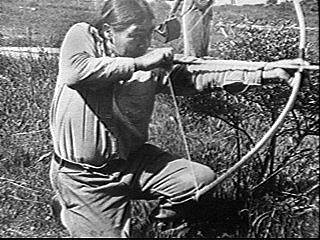 Hunting is an extension of that to a degree. However, its significantly more than that. As I get older (and I am) I think more about where I've come from. There's less of where I'm going, going to happen so it makes sense to look back a bit more. My father, my grandfather, and his grandfather.. each successive generation has had more education, more technological knowledge, better pay, better health, and less skills with less. I hesitate to call them "primitive skills" but hunting, fishing, gathering of food from the land, building things with simple tools. We, the men in my family are far from unskilled. My dad is a skilled carpenter, welder, he is a good fisherman, and gun hunter. He's restored two classic cars by himself. Like I said he has a ton of industrialized skills, but my grandfather was better in the woods, better tracker, better hunter. My dad is no slouch in these regards, but I am. These kinds of skills connect us to our ancestors. From early tool using primates to (in my case) our grandfathers. If the deterioration of these kinds of skills continues; from my grandfather to my father, to me, to my kids. In a generation or two these skills will be completely lost. Some people do not see this as a loss, but as an improvement. I disagree. We are primates. No matter how we dress, or live. We are not different from the early hominids, we just have better tools. Any thought besides this is an affectation. A denial of our evolutionary history. As I get older I have a strong desire to reach back into my ancestry to grab hold of those basic skills and abilities and then to pass them down.
So those of you who are with me this far (Hi) may wonder why use a bow. If we are primates with sufficient technology, and that tech (guns and gun making) is not going away any time soon (even in the worst end of the world scenarios there will still be guns.. not everyone will have them but they will be around for at least a generation, maybe two in present form and building a muzzle loader with basic gear is not to difficult).
The first and most basic is comfort. I am comfortable shooting a bow. I have shot bows for a long time and I just like them better than guns.
Second reason is practice. If I am going to shoot a weapon at an animal I want to be 100% sure that I am well practiced. I won't shoot unless I'm sure, and the only way to be sure is to shoot. The places where one can shoot a gun regularly are very limited in my area. Bows can be shot anywhere with a safe backstop.
Third reason is cost. right now I have $350 in my rig, all I need are broad-heads and I'm good to go. I could go hunt small game right now. A rifle would be far more. I can practice the bow in my backyard, not so with the gun so that means time and range fees. Whats more I can re-shoot arrows, so the bow is cheaper by a mile. The bow also has the advantage of not needing to be swapped for different game. Deer? Elk? Turkey? different arrows, same bow. Poundage may need to be dialed up or down, but its the same gear.
Fourth reason is greater skill level required. You have to be closer. You have a smaller zone of lethality. You have a greater requirement for tracking. For someone interested in skill development (me) this has a higher appeal. Lastly its a challenge. The whole point in taking this on is that I currently do not posses the skills to do it. I have gone gun hunting for Turkey, deer, and small game as a kid. I haven't killed anything of note, but I have the understanding to build those skills already. So there's less of a challenge for me.

Finally is the stigma and worry of "guns in the house." I live in Seattle. I will be very careful with locking up any guns and keeping them unloaded, and keeping the ammo separate and also locked up. However, out here there is the assumption that guns are guns, and homes with guns are unsafe for small children. I understand where this fear comes from. One just never knows who is intelligently managing their guns and kids and who isn't. Some folks out here have a scorched earth policy when it comes to any firearm in the house. It is simply a hassle I don't want or need. There are no guns in my house, but there are two bows and several arrows, one bow draws at 45 lbs the other at 65. Your child is in no danger from them. End of questions.
None of this is to slag on gun hunters. Hunting with a firearm is not easy. I intend to make the transition to gun hunting eventually, but for right now the bow is what I really want to do.
Lastly a note on this blog. This is something I am putting a lot of time, money and mental energy in, so that's what I'm writing about. I realize this is a subject that is unappealing to some folks. Please know that I am not a trophy hunter, and I will not be posting pictures of dead animals to the blog. Also know that I have some jiu-jitsu projects in the works, so for folks reading for that stuff please stay tuned.
Mahalo.
Sunday, February 22, 2015
In which I begin another quixotic persuit.
Hello gentle reader. It has been far too long. A lot of things have changed, and yet a lot of things have stayed the same. More on that later. Lets just jump right in with my latest passion/obsession/fixation.
In November, the Grizzly bear (aka my oldest child), having seen Brave, and Robin hood decides he wants a bow and arrow for christmas. I got my first toy bow around the age of 5. I consult with the wife and she's good with it. So my father (who bought me my first bow, and second bow) buy this for the Grizz. He loves it, and in teaching him to shoot I think fondly back on growing up shooting recurve bows in the back yard. I realize that I can backyard shoot where I live. The neighbours behind us have a good sized shed along the fence line so it is safe to shoot in our yard using the shed as a backstop. So I use some christmas $$ and on a lark buy a PSE Stalker, a few arrows, and a shooting tab.
Over the next month I start shooting not quite every day, but at least 3-4 times a week. It's a blast, and I get pretty good with it (inside of a 12" target anywhere within 20 yards or so). I start thinking about shooting small game, maybe going turkey hunting in the fall. I know that my good friend, and professor (the man who has awarded me each of my jiu jitsu belts) has been bow hunting for years. We start talking and he invites me to go hunt with him in the fall. Well hell.. Stuff just got real. While I'm pretty good with a recurve, I'm not going to shoot an animal with a weapon I'm not 100% sure is as accurate and quickly lethal as possible. So I head up to a local place to look at their archery range and talk to them about formal coaching. I also start trolling around craigslist for a used compound bow. Lets talk bows for a minute.
 The bow on top is a recurve. It has the normal curve one would expect from a bow, and then the ends curve again to give a mechanical advantage to the bow. The draw weight depends on how far you pull it back. Pull back a little more and the bow bends a little further, and is harder to pull. Pull back less you get a little less, but there's no adjustment. You can see it's pretty simple. This particular one is designed to break down into three pieces, but beyond that bows like this have been used all around the world for a long damn time. It's made of wood. There are no sights (one can add sights but that doesn't make sense to me), the arrow simply rests on a shelf on the riser. One shoots this kind of bow instinctual. That is the same way one learns to throw a ball or shoot a basketball. You don't aim so much as point and stay consistent with how one draws and releases the bow. I have seen folks get really good with these, but consistently hitting a target at varying ranges takes a ton of practice, and I don't have the patience to get as good as I would have to be to shoot this bow at a living thing.
On the bottom is a compound bow (an old one, but a compound bow none the less). The limbs don't bend. Drawing the string spins a cam against cables that produce a tremendous amount of energy. The cam is designed to have a "let off" which is to say a 50lb draw with an 80% let off takes 50 lbs of force for the first 3/4 of the draw, but once you hit the let off point it only takes less force to pull it the rest of the way and only 10lbs to hold it at full draw. Makes it easy to pull back and hold while aiming, however one has to pull back to a specific length or either you won't hit the let off (if the bow is too long) or the string will actually stop (if the bow is too short). As such a compound bow needs to be fitted and tuned to the shooter. It has a sight in the string (called a peep) and a sight on the riser that one lines up with the target and as such one aims the bow more than simply shooting it (a massive oversimplification I realize but as good as I can do with the time and space allotted.. I may touch on this subject more later). Also a compound bow is generally drawn and released with a release, which is to say a mechanical device that clips to a loop tied to the string and that allows nearly instantaneous release of the arrow without any torque across the bow. It's smaller, heavier, more accurate and powerful than the recurve.
Ok, back to me. I head up to the range and pro shop. The guy I talked to was super helpful. He's also a traditional shooter who made the move to compounds. We talk releases, and keeping it simple (even the most basic gear is going to be such an improvement on what you're used to that you don't need to make it overly complicated). What's more they have a left handed bow on consignment. It's pretty old, but its a reasonably good brand, and It's long (I have crazy monkey arms for a guy my height, and as such draw longer than many bows on the market will adjust to, In other words I'm going to be luck to find a used bow at all. I try the bow, and it's a pretty good fit. Like I said it's old (best guess is 2008) but it's in good shape. I ask the guy to hold it till tomorrow. I talk it over with the wife, and go in the next day to buy it. I have been around compound bows my whole life, but have never shot one (lefty, and long. You cannot draw a compound bow across itself or it will 'blow up.') I have never used a release, I am a total newb that speaks the language, and what's worse the guy I was talking to the day before who knows that I don't know a damn thing wasn't there to slow things down and walk me through the fit of the bow. I got kind of left in the weeds by the guys that did "help me." I'm conflicted here. On one hand they were busy, and I was buying a fairly cheap consignment bow, but on the other hand I did drop $350 by the time I bought a release, arrows, and a couple accessories. So I'm simply choosing not to name or shame them. They weren't rude nor were they particularly helpful. So I will neither shame nor promote them. Fortunately I managed to get the bow basically dialed in (enough that I could do the rest myself) get a release purchased, arrows purchased and cut to length. Then I simply started shooting.
 First part of that was figuring out the release. The picture above is similar to the release I'm using. The calipers connect to a loop on the bow string. The strap goes around my wrist, and you use that to draw the bow. The trigger releases the shot. It's very different from shooting fingers. I was having a hell of a time at first. The bow was misfiring. I didn't trust it. I was rushing shots and shooting like terrible. Turns out the release was set to a hair trigger, and was far to hot for the bow I was drawing. A couple turns of an allen wrench and suddenly I'm shooting considerably tighter groups. This is something none of the research I did before buying the bow talked about. Make sure the release you get is set correctly for the bow you're drawing. At best it's nerve-racking to shoot a release set too hot, and at worst dangerous. This may be obvious to people who have been using releases forever, for us greenhorns it was not. Once that was done I figured out my anchor point (a point or points on my face that I anchor my hand at full draw so that I create a consistent platform to aim from).
Once I was shooting tighter groups I started adjusting my sights. First I adjusted them at 10 yards. This was pretty simple as it's easy to shoot tight groups at 10 yards. Then I moved back to 20. For this I used a lot of patience. I'm not great. There are a lot of moving parts and I'm not terribly consistent, so I make sure that I get consistent data before I move anything. It's taken a while, but I feel good about where my sights are (for now). I'm just collecting data, and slowly dialling my sights tighter and tighter.
The last adjustment I made was just this morning. I have been having a really difficult time getting my bow hand in the right position. I've tried a bunch different things. Nothing has worked. I had an epiphany this morning. I loosened my bow sling (a wrist strap that allows the archer to be confident in a loose relaxed grip on the bow). The sling was keeping my hand too tight to the bow. Loosened up and my grip got right (well, better) and again.. better shooting.
This is a journey. I'm far from an expert, in fact, I'm just getting started. I'll keep you posted of progress. I shoot nearly every day in the back yard. 20 yards. Next mile stone is mid-April when I take the Washington state hunter safety course. Then it looks like fall turkeys. I'll walk you through shooting, education, buying gear, licensing and whatever else comes up.
*as an aside. I realize I'm making a massive number of generalizations about bows and other gear. There are a number of companies who have some really interesting designs that don't meet the above descriptions. This is a post and a blog about a beginner describing to people on the outside what things are and how they work. I will not respond to pedantry, however if I'm wrong, or anyone out there has advice, I'm all ears.
**I also realize that I'm very likely doing dumb stuff. That's kind of the point. I'm here to document the mistakes I make. Keep others from making them. I'm well enough educated to know that I don't know what I'm doing, but I'm trying, I'm learning, and I'm willing to admit those mistakes.
Mahalo.
In November, the Grizzly bear (aka my oldest child), having seen Brave, and Robin hood decides he wants a bow and arrow for christmas. I got my first toy bow around the age of 5. I consult with the wife and she's good with it. So my father (who bought me my first bow, and second bow) buy this for the Grizz. He loves it, and in teaching him to shoot I think fondly back on growing up shooting recurve bows in the back yard. I realize that I can backyard shoot where I live. The neighbours behind us have a good sized shed along the fence line so it is safe to shoot in our yard using the shed as a backstop. So I use some christmas $$ and on a lark buy a PSE Stalker, a few arrows, and a shooting tab.
Over the next month I start shooting not quite every day, but at least 3-4 times a week. It's a blast, and I get pretty good with it (inside of a 12" target anywhere within 20 yards or so). I start thinking about shooting small game, maybe going turkey hunting in the fall. I know that my good friend, and professor (the man who has awarded me each of my jiu jitsu belts) has been bow hunting for years. We start talking and he invites me to go hunt with him in the fall. Well hell.. Stuff just got real. While I'm pretty good with a recurve, I'm not going to shoot an animal with a weapon I'm not 100% sure is as accurate and quickly lethal as possible. So I head up to a local place to look at their archery range and talk to them about formal coaching. I also start trolling around craigslist for a used compound bow. Lets talk bows for a minute.
On the bottom is a compound bow (an old one, but a compound bow none the less). The limbs don't bend. Drawing the string spins a cam against cables that produce a tremendous amount of energy. The cam is designed to have a "let off" which is to say a 50lb draw with an 80% let off takes 50 lbs of force for the first 3/4 of the draw, but once you hit the let off point it only takes less force to pull it the rest of the way and only 10lbs to hold it at full draw. Makes it easy to pull back and hold while aiming, however one has to pull back to a specific length or either you won't hit the let off (if the bow is too long) or the string will actually stop (if the bow is too short). As such a compound bow needs to be fitted and tuned to the shooter. It has a sight in the string (called a peep) and a sight on the riser that one lines up with the target and as such one aims the bow more than simply shooting it (a massive oversimplification I realize but as good as I can do with the time and space allotted.. I may touch on this subject more later). Also a compound bow is generally drawn and released with a release, which is to say a mechanical device that clips to a loop tied to the string and that allows nearly instantaneous release of the arrow without any torque across the bow. It's smaller, heavier, more accurate and powerful than the recurve.
Ok, back to me. I head up to the range and pro shop. The guy I talked to was super helpful. He's also a traditional shooter who made the move to compounds. We talk releases, and keeping it simple (even the most basic gear is going to be such an improvement on what you're used to that you don't need to make it overly complicated). What's more they have a left handed bow on consignment. It's pretty old, but its a reasonably good brand, and It's long (I have crazy monkey arms for a guy my height, and as such draw longer than many bows on the market will adjust to, In other words I'm going to be luck to find a used bow at all. I try the bow, and it's a pretty good fit. Like I said it's old (best guess is 2008) but it's in good shape. I ask the guy to hold it till tomorrow. I talk it over with the wife, and go in the next day to buy it. I have been around compound bows my whole life, but have never shot one (lefty, and long. You cannot draw a compound bow across itself or it will 'blow up.') I have never used a release, I am a total newb that speaks the language, and what's worse the guy I was talking to the day before who knows that I don't know a damn thing wasn't there to slow things down and walk me through the fit of the bow. I got kind of left in the weeds by the guys that did "help me." I'm conflicted here. On one hand they were busy, and I was buying a fairly cheap consignment bow, but on the other hand I did drop $350 by the time I bought a release, arrows, and a couple accessories. So I'm simply choosing not to name or shame them. They weren't rude nor were they particularly helpful. So I will neither shame nor promote them. Fortunately I managed to get the bow basically dialed in (enough that I could do the rest myself) get a release purchased, arrows purchased and cut to length. Then I simply started shooting.

Once I was shooting tighter groups I started adjusting my sights. First I adjusted them at 10 yards. This was pretty simple as it's easy to shoot tight groups at 10 yards. Then I moved back to 20. For this I used a lot of patience. I'm not great. There are a lot of moving parts and I'm not terribly consistent, so I make sure that I get consistent data before I move anything. It's taken a while, but I feel good about where my sights are (for now). I'm just collecting data, and slowly dialling my sights tighter and tighter.
The last adjustment I made was just this morning. I have been having a really difficult time getting my bow hand in the right position. I've tried a bunch different things. Nothing has worked. I had an epiphany this morning. I loosened my bow sling (a wrist strap that allows the archer to be confident in a loose relaxed grip on the bow). The sling was keeping my hand too tight to the bow. Loosened up and my grip got right (well, better) and again.. better shooting.
This is a journey. I'm far from an expert, in fact, I'm just getting started. I'll keep you posted of progress. I shoot nearly every day in the back yard. 20 yards. Next mile stone is mid-April when I take the Washington state hunter safety course. Then it looks like fall turkeys. I'll walk you through shooting, education, buying gear, licensing and whatever else comes up.
*as an aside. I realize I'm making a massive number of generalizations about bows and other gear. There are a number of companies who have some really interesting designs that don't meet the above descriptions. This is a post and a blog about a beginner describing to people on the outside what things are and how they work. I will not respond to pedantry, however if I'm wrong, or anyone out there has advice, I'm all ears.
**I also realize that I'm very likely doing dumb stuff. That's kind of the point. I'm here to document the mistakes I make. Keep others from making them. I'm well enough educated to know that I don't know what I'm doing, but I'm trying, I'm learning, and I'm willing to admit those mistakes.
Mahalo.
Subscribe to:
Posts (Atom)
